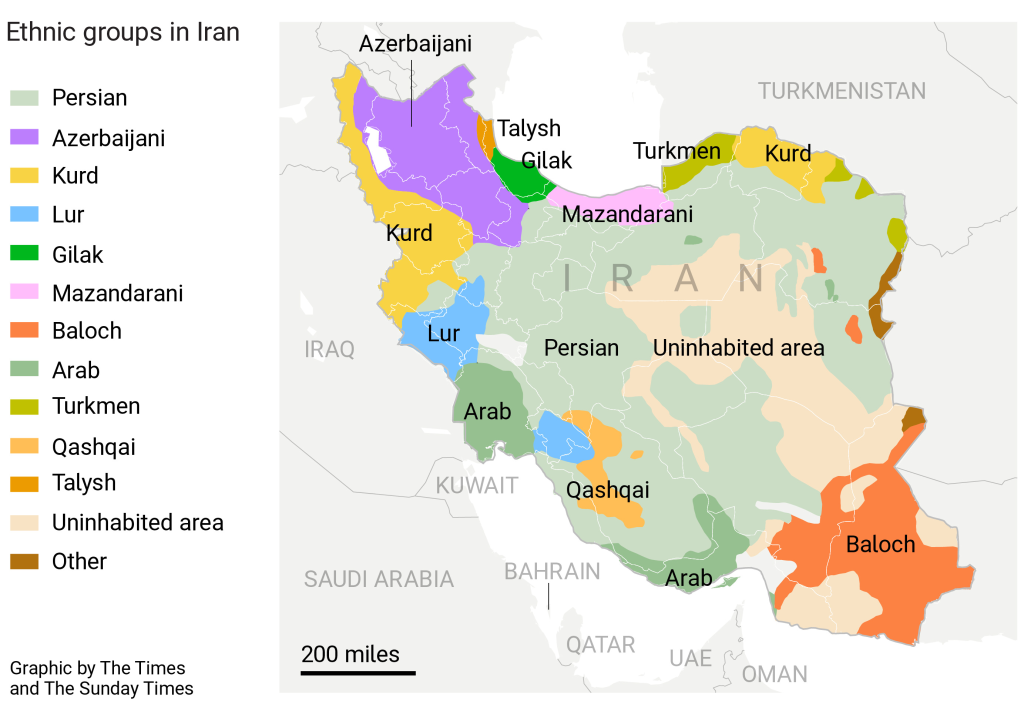
To understand Iran, understand its many peoples: This diverse, mountainous nation of 92 million has long been held together by force. Can it last, the Prisoners of Geography author asks (Tim Marshall, 3/08/26, Times uk)
Because they are difficult to connect, populated mountain regions develop their own cultures. Ethnic groups cling to their identities and resist absorption, making it difficult for the state to foster national unity. Throughout history the country’s rulers have sought strong, centralised and often repressive systems of government to keep the minorities under control and ensure no region can break away or assist foreign powers.
Roughly 60 per cent of Iran’s population is Persian; among the rest are Azeris, Kurds, Arabs, Balochs, Lurs, Turkmen and Armenians, all of whom speak their own languages. There are even a few villages in which Georgian is spoken. The tiny community of Jews (about 8,000) can be traced all the way back to the Babylonian Exile in the 6th century BC. The state religion is Shia Islam, but Iran has Sunni Muslims, Zoroastrians and Baha’is.