In an 11-page written testament, a former apostolic nuncio to the United States has accused several senior prelates of complicity in covering up Archbishop Theodore McCarrick's allegations of sexual abuse, and has claimed that Pope Francis knew about sanctions imposed on then-Cardinal McCarrick by Pope Benedict XVI but chose to repeal them.Archbishop Carlo Maria Viganò, 77, who served as apostolic nuncio in Washington D.C. from 2011 to 2016, wrote that in the late 2000s, Benedict had "imposed on Cardinal McCarrick sanctions similar to those now imposed on him by Pope Francis" and that Viganò personally told Pope Francis about those sanctions in 2013.Archbishop Viganò said in his written statement that Pope Francis "continued to cover" for McCarrick and not only did he "not take into account the sanctions that Pope Benedict had imposed on him" but also made McCarrick "his trusted counselor," claiming that the former archbishop of Washington advised the pope to appoint a number of bishops in the United States, including Cardinals Blase Cupich of Chicago and Joseph Tobin of Newark.Archbishop Viganò, who said his "conscience dictates" that the truth be known as "the corruption has reached the very top of the Church's hierarchy," ended his testimony by calling on Pope Francis and all of those implicated in the cover up of Archbishop McCarrick's abuse to resign.
This little girl is explaining to Trump why 'Tariffs not only impose immense economical costs but also fail to achieve their primary policy aims and foster political dysfunction along the way.' pic.twitter.com/4FlNxU5qam
— Josh Jordan (@NumbersMuncher) August 25, 2018
A worker on the average wage had to work 508 hours to buy a 15" color TV in 1954. In 2014, they needed to work only 7.8 hours to buy a 50" high-definition TV, a far better product. That's a price reduction of 98.5%. Explore other price changes over time: https://t.co/kFynZ889LJ pic.twitter.com/MxGOHDCVGN
— Cato Institute (@CatoInstitute) August 25, 2018
Shortly after taking over as United States attorney in San Francisco in 1998, former colleagues recalled, Mr. Mueller asked all the supervisors in the office to step down. He promptly sent a Justice Department-wide email announcing that "the following positions are now open" -- and listing every major prosecution job in Northern California.Many in the office found it brusque and off-putting. But Mr. Mueller told colleagues that he had learned a management style decades earlier as a Marine platoon commander: You cannot make people do things that they are incapable of doing. So rather than prodding employees, he preferred to move quickly to assemble the best possible team, even if his method was disruptive.As special counsel, Mr. Mueller has recruited talented prosecutors from across the country, stocking the office both with trusted longtime colleagues and younger prosecutors with sterling résumés. "If you have an opportunity to work with him and learn from him, you do it," said Melinda Haag, a former United States attorney in Los Angeles who once served as Mr. Mueller's chief white-collar prosecutor.Mr. Mueller was not the obvious choice to lead the San Francisco office during the Clinton administration. Those jobs usually go to politically connected lawyers, and Senator Barbara Boxer, Democrat of California, had formed a selection committee to recommend candidates.Mr. Mueller was tied to the wrong party, having served as a top Justice Department appointee of George Bush. But the San Francisco office was adrift, and career prosecutors at the Justice Department in Washington recommended Mr. Mueller for the job. And though Ms. Boxer had an eye for liberal nominees who diversified the work force, the chairwoman of her committee, Cristina C. Arguedas, had known and respected Mr. Mueller when he was a young prosecutor and she was a public defender."It was quite ironic, me going to Barbara Boxer saying, 'You have to give this plum appointment to this straight white guy who's also a rock-ribbed Republican,'" Ms. Arguedas recalled.Judge Patel said she also quietly recommended Mr. Mueller to top Justice Department officials. "I'm a Democrat. He's a Republican," Judge Patel said. "But he's a different kind of Republican, the kind we remember."Had Mr. Mueller entertained political ambitions, Republicans could hardly have dreamed up a better pedigree: Robert Swan Mueller III, the son of a DuPont executive and the grandson of a railroad magnate, whose birth was announced in the New York Times society pages. A product of New England prep school and Princeton, he was a lacrosse and hockey star who volunteered for the Marines and earned a Bronze Star and a Purple Heart in Vietnam. He married shortly before enlisting; he and his wife, Ann, a schoolteacher, have two daughters.But Mr. Mueller never flirted with elected office. After law school at the University of Virginia -- one of a few prestigious schools that did not look down on his Vietnam service, he would later say -- he began angling for jobs as a prosecutor."I wanted to do public service," he told his law school alumni magazine in a rare interview. "Every day you go to work because you want to; there is always something interesting and exciting. And you do it for somebody else, not just for the salary."
Clemson University RAs no longer have to "demonstrate a commitment to social justice" to be eligible for the position.
The Chapel Hill Police Department will not discipline a police officer who stood guard near the "Silent Sam" Confederate statue at the University of North Carolina on Monday with a tattoo of the logo of the Three Percenters, a nativist anti-government militia, visible on his right forearm. Instead, the officer, Cole Daniels, has been instructed to keep his tattoo covered while at work. [...]The image of a law enforcement official displaying a symbol associated with racially motivated violence while policing protesters as they toppled a symbol of white supremacy was jarring.
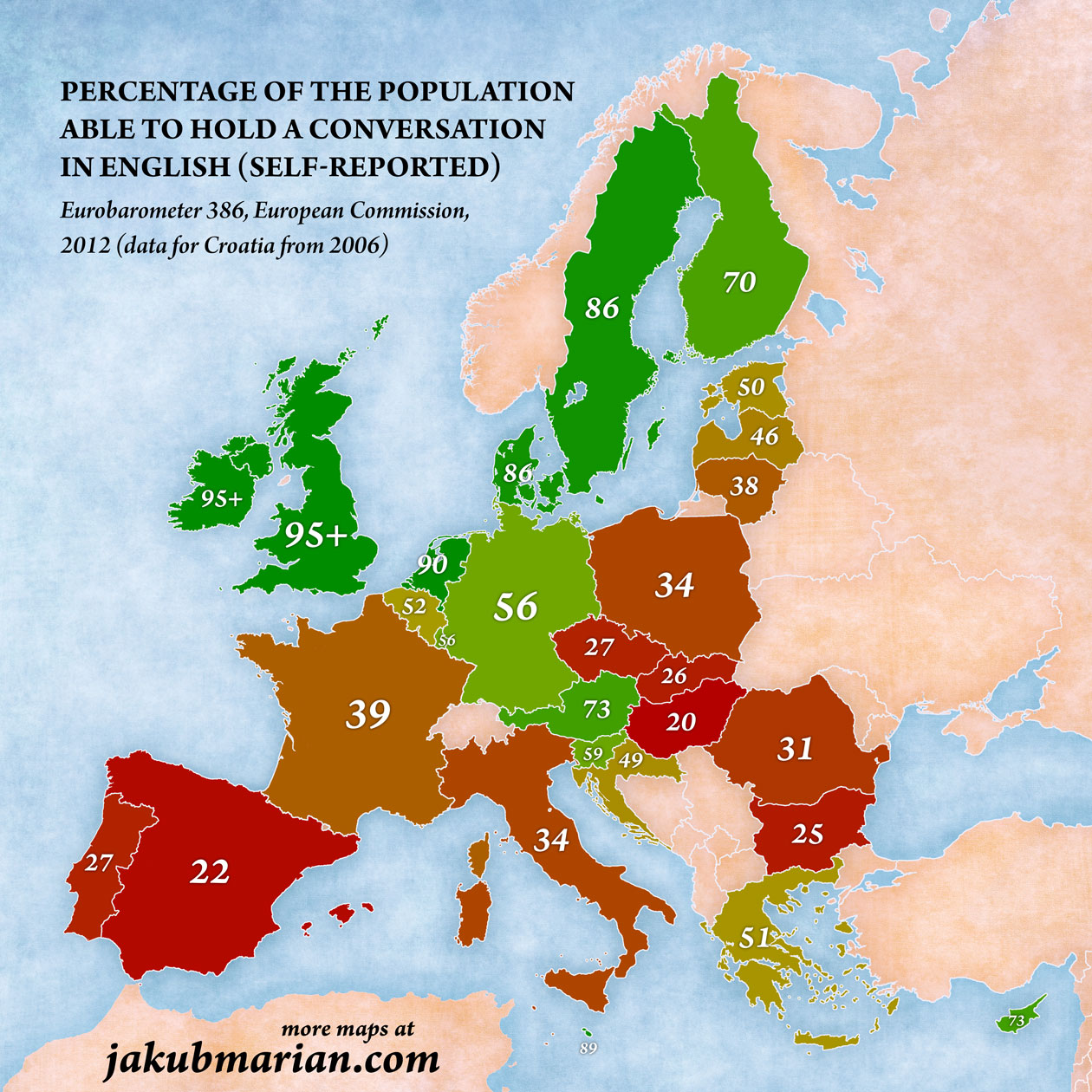
Only 20% of American K-12 students learn a foreign language, compared to a median of 92% of students from European countries, according to a study by Pew Research.
"They came over with chains, sticks and knives. There were about eight of them. They started hitting us without mercy," one of them, identified only as 'M,' told Haaretz. He said the attackers shouted at them that they should not come to the beach. [...]'M' said it was the first time he had encountered such violence. "How can someone ask someone what they are and then beat them?" he said. "Are we not allowed to be here because we're Arabs? This is a public place and all Israelis are allowed. I was born here in Haifa."
"Right now it's going full bore," said Mark Bolinger, a research scientist at the Lawrence Berkeley National Laboratory and co-author of one of the new reports. "The industry is really going all out."Some of the key findings:The country's wind energy capacity has tripled since 2008, reaching 88,973 megawatts by the end of 2017. Wind contributed 6.3 percent of the nation's energy supply last year.The average price of wind power sales agreements is now about 2 cents per kilowatt-hour, down from a high of 9 cents in 2009 and low enough to be competitive with natural gas in some areas.State renewable energy requirements once were the leading contributor to demand for new wind farms, but they were responsible for just 23 percent of new project capacity last year due to rising demand for clean energy from corporate customers, like Google and General Motors, and others.Offshore wind is going from almost nothing, with just five wind turbines and 30 megawatts of capacity off Rhode Island, to 1,906 megawatts that developers have announced plans to complete by 2023."The short story is wind is doing well in the markets, has been doing well, and looks like it will continue to do well," said Michael Webber, deputy director of the energy institute at the University of Texas at Austin, who was not involved with the reports.
Cities were a mistake https://t.co/pgZAWat35V
— brothersjudd (@brothersjudd) August 25, 2018
Q: What did socialists use before candles?
— Mark J. Perry (@Mark_J_Perry) August 25, 2018
A: Electricity.
Completing a year of community service would improve the integration of refugees into German society and their acceptance by the public, the general secretary of Chancellor Angela Merkel's conservative party said on Saturday. [...][S]he said many party members had told her during a summer "listening tour" that reinstating the draft - which was scrapped in 2011 - or community service was a good idea for both native Germans and immigrants."If refugees complete such a year, either voluntary or compulsory, it would help their integration into the country and society. And in the populations, it would increase acceptance that refugees live among us," she told the newspapers.
There is some evidence women pay more than men for mortgages, cars and auto repairs and have less access to small-business credit, a federal report has found. (Bertrand Langlois / AFP/Getty Images)The "pink tax" is real: Many products aimed at women cost more than the versions men are supposed to buy -- and women might also be paying more for gender-neutral things such as mortgages, according to a new report by the Government Accountability Office.The report found that, in five cases out of 10, a personal care product marketed to women, such as a deodorant, cost significantly more than a similar version marketed to men. It found only two product categories -- shaving gels and non-disposable razors -- that were more expensive for men.
There was a simple explanation in October 2017 when a Department of Homeland Security official was asked why a memo justifying ending immigrant protections for Central Americans made conditions in those countries sound so bad."The basic problem is that it IS bad there," the official wrote.Nevertheless, he agreed to go back and see what he could do to better bolster the administration's decision to end the protections regardless.The revelation comes in a collection of internal emails and documents made public Friday as part of an ongoing lawsuit over the decision to end temporary protected status for hundreds of thousands of immigrants who live in the US, most of whom have been here for well over a decade.Friday's document dump come as backup for the attorneys' request that the judge immediately block the government's decision to end these protections as the case is fully heard.
#BeverlyHillsHotel really making me pay for that World Series win 😂😂 Thanks for the great lunch as always! https://t.co/KjNKTKjyZF pic.twitter.com/IyECZPhLhE
— Justin Verlander (@JustinVerlander) August 24, 2018
The contract appears to have been signed on Nov. 15, 2015, and states that AMI has exclusive rights to Sajudin's story but does not mention the details of the story itself beyond saying, "Source shall provide AMI with information regarding Donald Trump's illegitimate child..."The contract states that "AMI will not owe Source any compensation if AMI does not publish the Exclusive..." and the top of the agreement shows that Sajudin could receive a sum of $30,000 "payable upon publication as set forth below."But the third page of the agreement shows that about a month later, the parties signed an amendment that states that Sajudin would be paid $30,000 within five days of receiving the amendment. It says the "exclusivity period" laid out in the agreement "is extended in perpetuity and shall not expire."The amendment also establishes a $1 million payment that Sajudin would be responsible for making to AMI "in the event Source breaches this provision."
Jesus wasn't a Christian. He wasn't the first Christian. He wasn't even a Christian with an interesting Jewish backstory. Nowhere does the carpenter from Galilee suggest that he wants to start a new religion. On the contrary: "I was sent only to the lost sheep of the house of Israel" he tells a woman in Matthew's gospel.Yes, Jesus would constantly argue with the religious authorities of his day. But argument with religious authority is itself a longstanding Jewish tradition. Jesus was Jewish, completely Jewish - he had a Jewish mother, he was circumcised according to the law, he kept kosher, his Bible was the Bible of Abraham, Isaac and Jacob, he attended his local Galilee synagogue, he taught in the Temple throughout his life, he made pilgrimage to the Temple for the special feasts. And he died Jewish, mocked as the King of the Jews. The very idea of Christianity was not even invented in his lifetime. Jesus was very much a somewhere - Jesus of Galilee.Most of Jesus' early followers were also Jewish, but not all of them. And for these people, the question began to arise whether being a follower of Jesus required following the Jewish law - and, in particular, whether it required the Jewish practice of circumcision. This question prompted a furious debate among Jesus' followers, with some maintaining that Jesus-following required the full commitments of Jewish religion, and some maintaining that it did not. St Paul was the leading proponent of the second view.Paul was also a Jew himself, indeed a Pharisee by training, but he was also a Roman citizen, born into the Jewish diaspora in what we now call Turkey - and thus the nearest thing to a citizen of the world that a Jew could be. For Paul, the God that he recognised in Jesus was absolutely the God who was promised to Jews in the Hebrew scriptures, but - and this was his world-changing idea - it was also a God who was promised to all humanity.It now seems obvious to Christians that the God spoken about by Jesus is a God who seeks the salvation of all people, irrespective of race, nationality or culture. But it wasn't at all obvious to many of Paul's contemporaries, and it took some arguing on his part. "In Christ there is neither Jew nor Greek," Paul insisted. You don't need to be ethnically Jewish to have a special relationship with God. With Jesus, the special deal that God had made with the Jewish people had been extended to include all non-Jews.It wasn't that Paul denied the idea that God had established a special relationship with the Jewish people in the first place - all those who are "in Christ" are "Abraham's offspring" he maintained, and the Jews were the chosen people - but now, Paul declared, being chosen was open to all.
My first time walking around the holy city of Mecca, I was amazed by the mixture of people. There were Africans, Asians, Europeans, Americans, and Arabs, all coexisting in this tiny place.In Jamarat, during the stoning of the devil ritual, where pilgrims hurl pebbles at a giant wall, men and women mixed together without the restriction of gender segregation that has been custom in public places in Saudi Arabia for decades.One day, after taking pictures of sunset prayers at the Grand Mosque, I sat on the side of the road watching thousands of men and women file out. I was surprised at how closely they were all crowded together, something that is frowned upon in most Muslim countries.That is part of what makes this place so special for me; the haj unites all Muslims, even those who might be waging war against each other back in their own countries.Sanjeeda Bagam, 60, a Muslim pilgrim from Pakistan, is wheeled by her son after they cast their stones at a pillar that symbolises Satan during the annual haj pilgrimage in Mena, Saudi Arabia, August 21, 2018. REUTERS/Zohra Bensemra"When the war began in Yemen I never would have imagined that I would one day have the capability to come to haj," Ibtissam Al Assiri, a 39-year-old pilgrim from Yemen, told me. "God bestowed this place upon Muslims to unite us."One of the lasting impressions I have is from the sound of pilgrims reciting in unison the main verses of the haj rituals. It sounded like a perfectly-synched orchestra. It gave me chills and filled my heart with joy.More than two million pilgrims attended this year's five-day ritual, which retraces the route Prophet Mohammed took 14 centuries ago. Many Muslims save their entire lives to attend.